How to Rent a Generator for Outdoor Events in BC Without Blowing a Fuse (Or Your Budget)
Key Takeaways
- Most tent weddings with lighting, sound, and catering need 5,000–9,000+ watts of generator power
- A quality 9,000-watt generator rental typically runs $150–$300 per day in BC’s Interior
- Always calculate your total wattage needs before booking — underestimating is the #1 mistake we see
- Fuel consumption, noise levels, and placement distance from guests matter more than you’d think
- Book your generator when you book your tent — they go fast during peak wedding season
Introduction
You’ve found the perfect vineyard property in the Okanagan. The tent is booked. The caterer is confirmed. Then someone asks: “Where are we plugging in the DJ?” And suddenly you’re googling “generator rental outdoor events BC” at midnight.
You’re not alone. Power is one of the most overlooked details in outdoor event planning — until it isn’t. At Apollo Event Rentals, we’ve powered hundreds of tent weddings, festivals, and corporate events across BC’s Okanagan, Thompson, and Shuswap regions. We’ve seen what happens when couples underestimate their power needs (spoiler: the dance floor goes dark mid-first-dance). This guide covers everything you need to know about renting a generator for your outdoor event in 2026 — real numbers, practical advice, and lessons learned from actual BC events.
How Much Power Does Your Outdoor Event Actually Need?
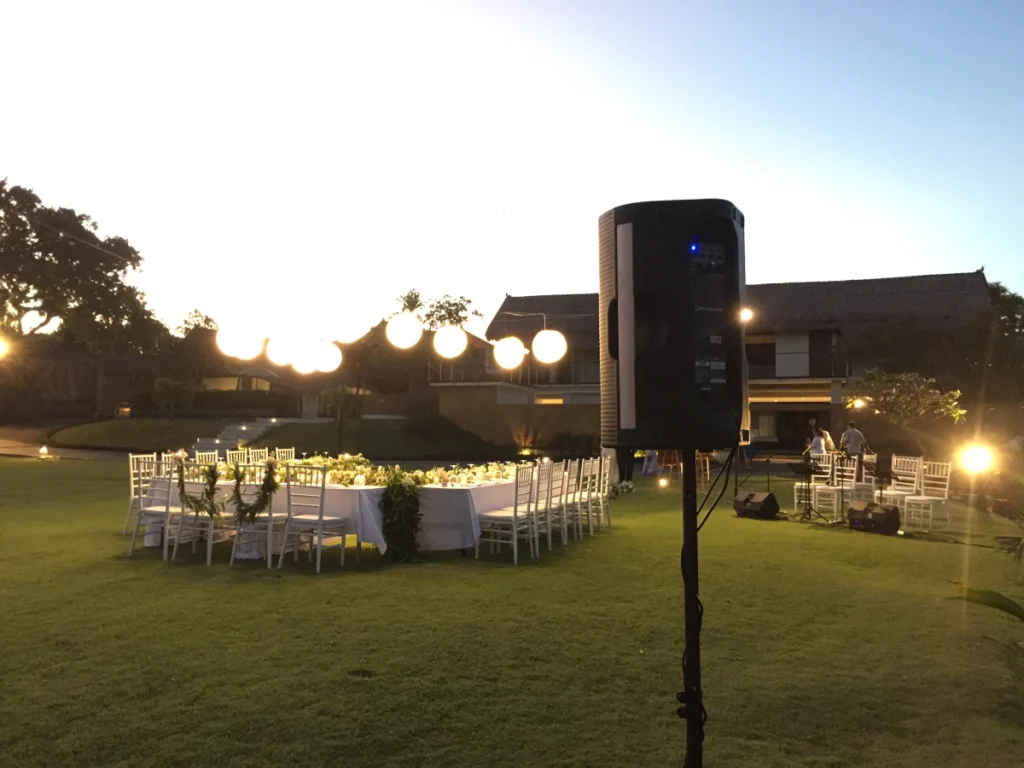
Here’s where most people get tripped up. They rent a small generator because it’s cheaper, then wonder why the lights flicker every time the espresso machine kicks on.
Let’s break down typical wattage requirements for outdoor events:
Basic tent wedding (100 guests):
- String lights and uplighting: 500–1,000 watts
- DJ setup with speakers: 1,500–2,500 watts
- Catering equipment (warming trays, coffee urns): 2,000–3,500 watts
- Miscellaneous (phone charging, photo booth): 500 watts
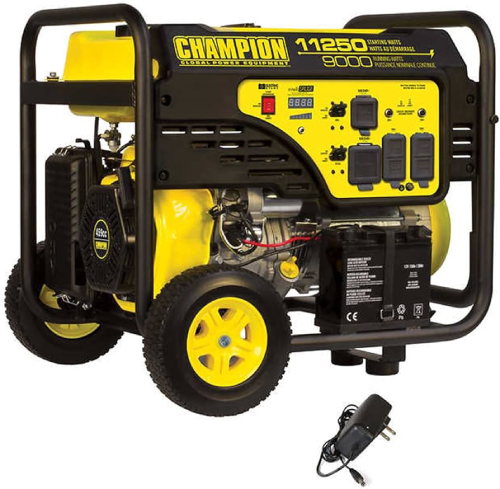
That’s 4,500–7,500 watts minimum — and you need headroom for startup surges. When a refrigerator or pump kicks on, it can draw 2–3 times its running wattage for a split second. This is why we typically recommend our 9000 Watt Champion Gas Generator for most tent weddings. It handles peak loads without breaking a sweat.
For larger festivals or events with commercial catering, you may need multiple generators or a higher-capacity unit. According to Natural Resources Canada’s energy guidelines, properly sizing your power source prevents both equipment damage and fuel waste.
What Does Generator Rental Cost in BC’s Interior?
Pricing varies by generator size, rental duration, and whether delivery is included. Here’s what you’ll typically pay in 2026:
Small generators (2,000–3,500 watts): $75–$150/day
Good for: intimate gatherings with minimal power needs, single vendor booths, backup lighting
Mid-size generators (5,000–7,500 watts): $125–$225/day
Good for: small weddings under 75 guests, modest sound and lighting setups
Large generators (9,000+ watts): $150–$300/day
Good for: full wedding receptions, catering equipment, DJ and live bands, dance floors with lighting
Weekend rates often offer better value — many companies (including us) provide Friday-to-Sunday pricing that works out cheaper than three separate day rentals. If you’re already renting a tent, bundling your generator saves on delivery fees. Check out our complete tent rental pricing guide for more on bundling equipment.
Fuel is typically your responsibility. A 9,000-watt generator running at 50% load burns roughly 3–4 litres of gas per hour. For a 6-hour reception, budget $40–$60 in fuel.
Generator Placement: Where You Put It Matters
Nobody wants their first dance accompanied by the gentle roar of a gas engine. Placement is crucial.
Distance from guests: We recommend positioning generators at least 50–75 feet from guest areas. Sound travels, especially on calm Okanagan evenings. Use longer extension cords (heavy-gauge, outdoor-rated) rather than compromising on distance.
Ventilation: Generators produce carbon monoxide. Never place them inside tents, enclosed spaces, or downwind from guest areas. This isn’t just good advice — it’s a safety requirement. Health Canada’s CO safety guidelines are worth reviewing if you’re managing your own setup.
Ground conditions: Generators need level, stable ground. If your venue has slopes (hello, every vineyard in Kelowna), bring plywood or a leveling solution. A tilted generator can have fuel and oil flow issues.
Weather protection: BC weather is unpredictable. A canopy or generator tent keeps rain off without restricting airflow. We’ve seen September weddings go from sunshine to downpour in twenty minutes — your generator needs to keep running regardless.
Common Generator Mistakes We See at BC Outdoor Events
After years of setting up events across the Interior, certain mistakes come up again and again:
Underestimating wattage: “We’re just running some lights” turns into lights plus a DJ plus the caterer’s warming equipment plus Grandma’s oxygen concentrator. Build in a 25% buffer minimum.
Forgetting startup surge: That 1,500-watt coffee maker? It pulls 2,800 watts for the first few seconds. Multiply that by every piece of equipment turning on, and you’ve got a tripped breaker during cocktail hour.
Last-minute booking: July and August weekends? Every generator in the Okanagan is spoken for by March. If you’re planning a summer wedding, book your power solution when you book your tent. Speaking of which, our guide on how wedding rentals work covers the full timeline for booking equipment.
Skipping the test run: If possible, do a test run with your caterer’s equipment before the event day. Discovering that your espresso machine trips the breaker is better handled at 2 PM on Thursday than 7 PM on Saturday.
No backup plan: What happens if your generator fails mid-event? Having a venue contact number, knowing the nearest equipment rental, or having battery-powered backup lights can save an evening.
Do You Actually Need a Generator?
Not every outdoor event requires one. Ask yourself:
- Does the venue have accessible outdoor power outlets?
- Is the available amperage sufficient for your needs? (Most residential outlets max at 15–20 amps)
- Are you within extension cord distance of power?
- Is your event during daylight only, with no amplified sound?
If you answered yes to all of these, you might get away without a generator. But if you’re hosting an evening reception with catering, music, and lighting under one of our marquee tents on a rural property? You need dedicated power.
When in doubt, call your caterer and DJ. Ask for their equipment lists and power requirements in writing. Add them up. Then add 25%. That’s your target wattage.
Powering Your Event the Right Way
A generator isn’t the glamorous part of your event. Nobody’s going to Instagram it. But when your illuminated cherry blossom trees stay lit, your dance floor keeps thumping, and your caterer serves hot food all night? That’s the generator doing its job.
At Apollo Event Rentals, we help couples and event planners across BC’s Interior figure out exactly what they need — from tents and tables to the power that runs it all. If you’re planning an outdoor event and aren’t sure about your power requirements, reach out. We’re happy to walk through your equipment list and recommend the right generator setup for your venue.
Ready to power your next outdoor event? Contact Apollo Event Rentals for a free quote on generator rental and complete event packages across the Okanagan, Thompson, and Shuswap regions.