Key Takeaways
- A 12×15′ smoked oak dance floor comfortably accommodates 30-40 dancers at once — perfect for weddings of 100-150 guests
- Outdoor dance floors almost always require a subfloor on grass, gravel, or uneven terrain
- Ground prep and leveling can make or break your setup — slopes over 2% need professional assessment
- Booking your dance floor 4-6 months ahead ensures availability during peak wedding season (May-September)
- Weather protection matters — pairing your dance floor with a tent keeps both the floor and your guests safe
Introduction
If you’re planning an outdoor wedding or event in BC and searching for “dance floor rental BC,” you’ve probably noticed that most rental companies don’t give you much detail about what’s actually involved. That’s frustrating when you’re trying to plan a vineyard wedding in the Okanagan or a backyard celebration in Kamloops.
Here’s the thing: renting a dance floor for an outdoor event isn’t as simple as dropping panels on the grass. There’s ground prep, subflooring, weather considerations, and sizing to think about. At Apollo Event Rentals, we’ve installed dance floors on everything from perfectly flat patios to sloped lakeside properties in Kelowna, Vernon, and Salmon Arm. This guide covers what we’ve learned from hundreds of setups — so you can budget properly and avoid the mistakes we see every season.
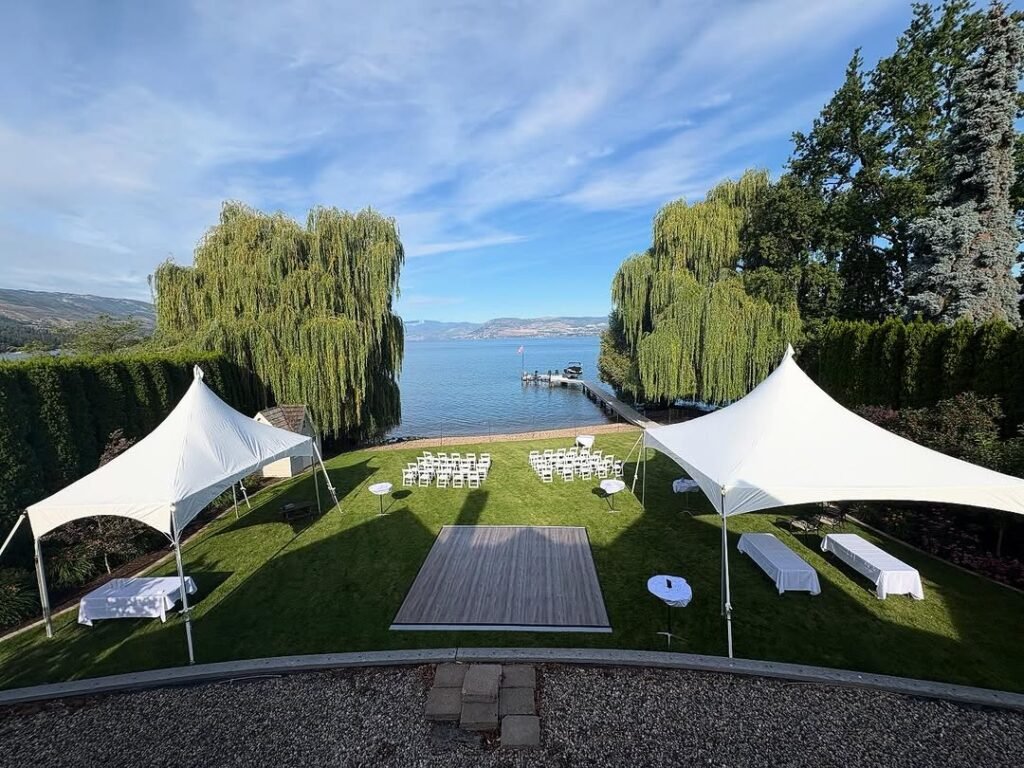
Why You Can’t Just Put a Dance Floor on Grass
Let’s address the most common question we get: “Can I just set up the dance floor directly on my lawn?” Technically, yes. Should you? Almost never.
Grass is uneven, soft, and unpredictable. Even if your backyard looks flat, there are subtle dips and bumps that become very obvious when people start dancing. We’ve seen guests twist ankles on floors that shift mid-song. Not exactly the reception memory you’re hoping for.
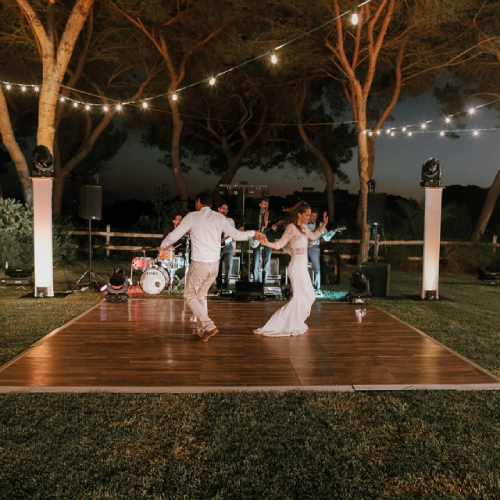
That’s why we offer an outdoor subfloor that creates a stable, level foundation. It sits between the ground and your dance floor panels, distributing weight evenly and preventing that spongy feeling. According to Health Canada’s guidelines on physical activity safety, stable surfaces are essential for preventing injuries during physical activities — and dancing definitely counts.
If your site has a slope greater than about 2%, we’ll need to assess whether leveling is possible or if you should consider a different location on your property. We’ve worked with some challenging terrain in BC wine country, and there’s usually a solution — but it’s better to know early.
Choosing the Right Dance Floor Size for Your Event
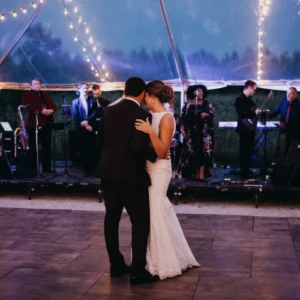
Our most popular option is the 12×15′ Smoked Oak Dance Floor. It’s elegant, photographs beautifully, and fits most BC weddings perfectly. But how do you know if it’s the right size for your event?
Here’s the rule of thumb we use: expect about 30-40% of your guests to be on the dance floor at any given time during peak dancing hours. For a wedding with 120 guests, that’s roughly 35-50 people. Our 12×15′ floor (180 square feet) gives each dancer about 4-5 square feet — comfortable without feeling empty.
Quick sizing guide:
- 50-75 guests: 12×12′ works well
- 75-125 guests: 12×15′ is ideal (our smoked oak option)
- 125-175 guests: Consider 15×18′ or larger
- 175+ guests: Custom configurations available
If you’re still figuring out your overall layout, our guide on wedding rental costs in Kelowna breaks down all the pieces you’ll need to budget for.
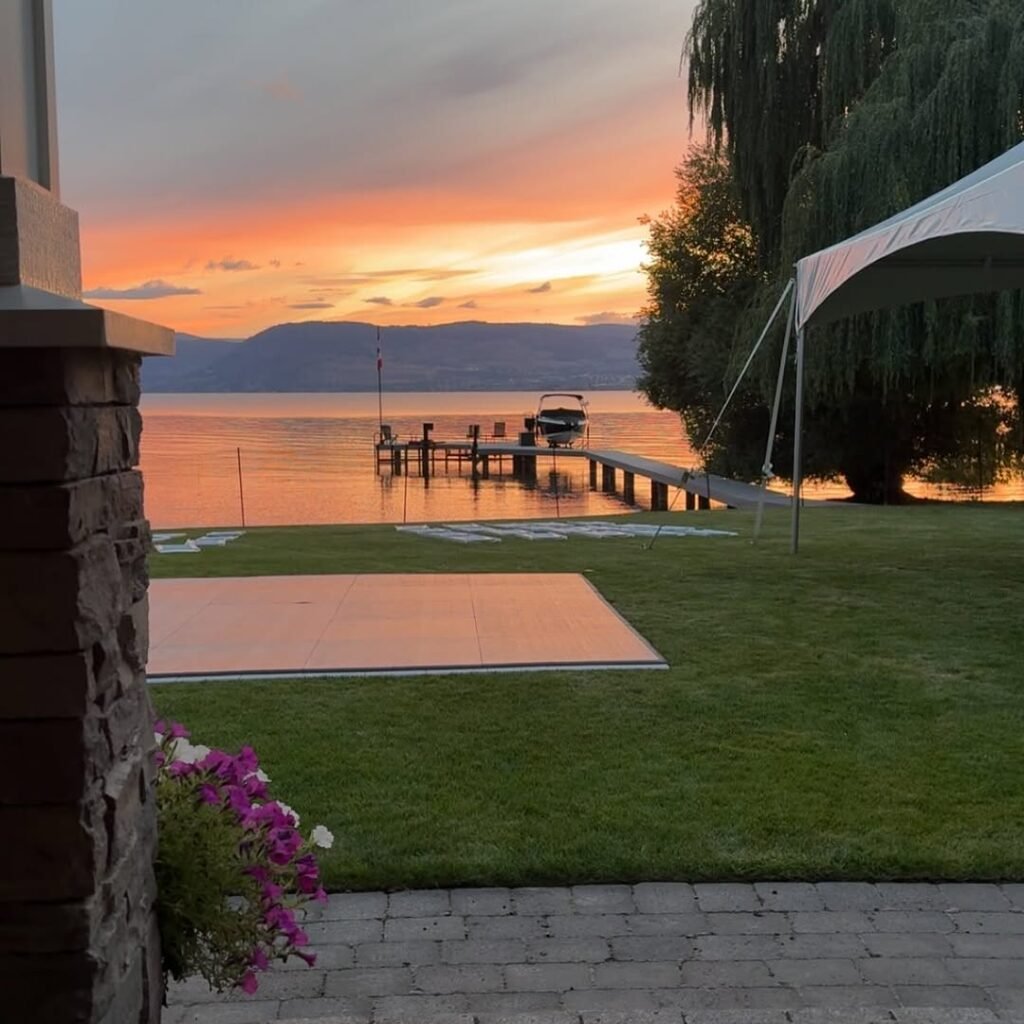
Pairing Your Dance Floor with Weather Protection
BC weather is beautiful but unpredictable. We’ve seen August weddings with surprise showers and September events with scorching heat. A dance floor without overhead protection is a gamble.
Most of our clients pair their dance floor rental with one of our marquee tents. The 40×40 High Top Marquee Event Tent fits a 12×15′ dance floor plus surrounding tables comfortably, with room for a DJ setup and some cocktail space. If you’re working with a tighter footprint, the 20×60 High Top Marquee creates a beautiful elongated layout with the dance floor at one end.
Beyond rain protection, tents help with:
- Sun shade during afternoon ceremonies that transition to evening receptions
- Wind protection (those decorative table settings won’t survive a Kamloops gust)
- Defined event space on larger properties
- Lighting and décor attachment points
Not sure if you need a tent? Our post on whether you need a tent for your Kelowna wedding walks through the decision in detail.
The Setup Process: What to Expect
Here’s how a typical dance floor installation works for outdoor events in the Okanagan and Thompson regions:
1-2 days before your event: We arrive to assess the final ground conditions and install the subfloor if needed. This takes 2-4 hours depending on site complexity.
Day before or morning of: Dance floor panels are installed on top of the subfloor. The smoked oak finish is pre-sealed and ready for action — no additional prep needed on your end.
Day after your event: We handle complete teardown and removal. You won’t be stuck dismantling rental equipment during your post-wedding brunch.
A few things that help the process go smoothly:
- Clear vehicle access to the setup area (our trucks need to get reasonably close)
- Lawn irrigation turned off for 48 hours before setup
- A designated point person if you won’t be on-site during installation
For vineyard or winery venues, we coordinate directly with venue staff. We’ve worked at most Okanagan wedding venues and know the access quirks at each one.
What Affects Your Dance Floor Rental Cost
Since we’re being transparent about pricing — just like in our event rental guides — here are the factors that influence your final quote:
Base dance floor rental: This covers the floor panels themselves. Our 12×15′ Smoked Oak Dance Floor is a premium option with that warm, modern wood-look finish that’s popular for Okanagan weddings.
Subfloor requirements: If you’re setting up on grass, gravel, or uneven ground, the outdoor subfloor is an essential add-on. It’s not optional for most outdoor setups — it’s what keeps your floor safe and level.
Delivery distance: We serve Kelowna, Vernon, Penticton, Kamloops, Salmon Arm, and surrounding areas. Delivery fees are based on distance from our location.
Setup complexity: A flat concrete patio in Kelowna is straightforward. A sloped orchard property in Summerland with limited vehicle access takes more time and equipment.
Peak season timing: June through September books up fast. Booking 4-6 months ahead gives you the best selection and avoids rush fees.
Common Mistakes to Avoid
After years of BC event setups, here are the pitfalls we see most often:
Underestimating ground prep time. If your property needs leveling or extensive subfloor work, that’s not a same-day addition. We need advance notice to plan properly.
Forgetting about power. If you’re adding lighting around your dance floor (highly recommended for evening events), you’ll need power access. Our 9000 Watt Champion Gas Generator handles most setups cleanly.
Skipping the tent. We’ve seen too many beautiful dance floors damaged by unexpected rain. Even if the forecast looks perfect, BC mountains create their own weather.
Waiting too long to book. Peak wedding season means our dance floor inventory gets committed early. If you’re planning a July or August wedding, don’t wait until spring to reach out.
Ready to Plan Your Outdoor Dance Floor?
Setting up a dance floor for an outdoor event in BC takes more planning than an indoor venue — but the results are worth it. There’s nothing quite like dancing under the stars at a Okanagan vineyard or a lakeside property in the Shuswap.
If you’re ready to start planning, contact Apollo Event Rentals for a detailed quote. We’ll walk through your site requirements, recommend the right floor size, and make sure you’ve got everything covered — from subfloor to weather protection. We’ve been doing this across BC for years, and we’re happy to share what we’ve learned.